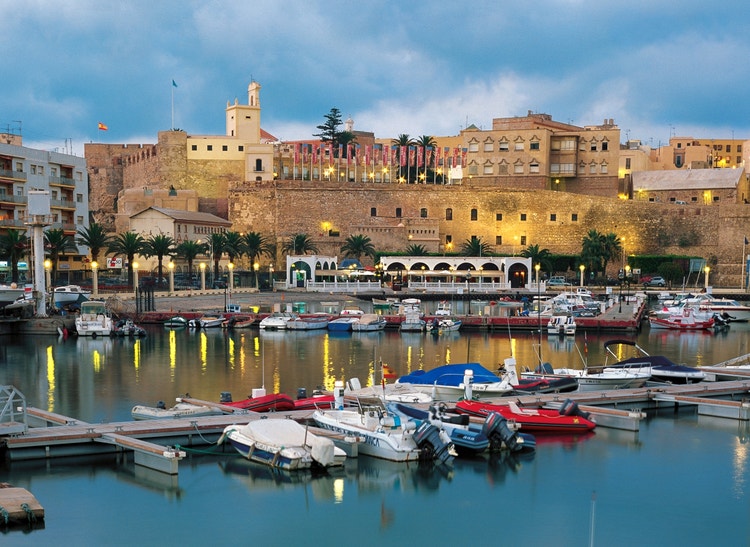
Melilla marina with boats and the historic fortified walls of Melilla la Vieja in the background.
Discover Melilla, a Spanish City on the North African Coast
Melilla is a unique and compact Spanish autonomous city on the North African coast, with historic fortifications, Modernist streets, pine-covered hills, and Mediterranean views. The heart of the city is Plaza de España, a grand circular square surrounded by streets filled with the Modernist and Art Deco architecture for which the city is known. Melilla has the second-highest concentration of these buildings in Spain, following Barcelona, and many are associated with architect Enrique Nieto, who introduced Catalan Modernism to the city in the early 20th century. The Mir Berlanga seafront promenade stretches alongside Melilla’s golden-sand Mediterranean beaches, with palm-lined walkways, cafés, and restaurants along the waterfront.
The pine forests of Rostrogord, reached by a route that passes by the historic Victoria Grande fortress, offer stunning views of the city and the Mediterranean coast. One of Melilla’s most unusual features is its border with Morocco. The city is separated from mainland Spain by the Mediterranean and borders Morocco on its inland side, with the frontier visible near Rostrogordo.
Celestyal Cruises to Melilla
Melilla cruise port highlights
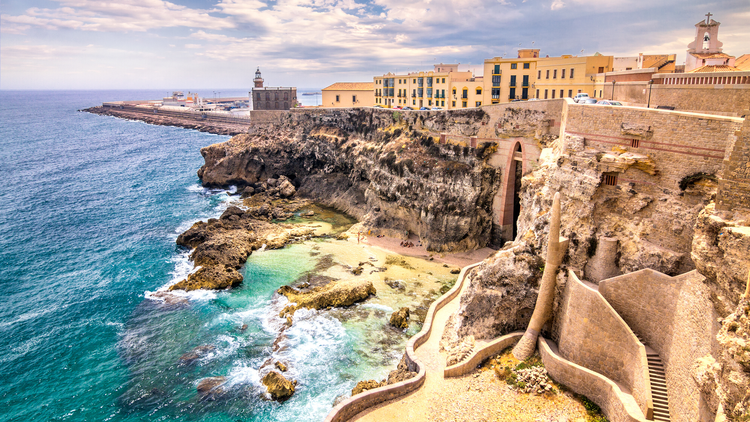
Fortified walls of Melilla la Vieja overlooking the rocky Mediterranean coast.
Melilla la Vieja and the Conventico Caves
Melilla la Vieja is the city’s historic fortified complex rising above the Mediterranean. Inside its first walled enclosure, the Conventico Caves descend through three levels. The natural caves, named after the Capuchin convent, had long been used as a refuge by Phoenicians, Romans, and Arabs. The Spanish expanded underground storage and shelter spaces in the 18th century, and they protected locals during Sultan Mohammed ben Abdallah's siege.
The caves extend through several levels beneath the old city. From inside, a passage leads down toward Cala de Trápana, a small cove beneath the fortified walls and open to views of the Mediterranean.
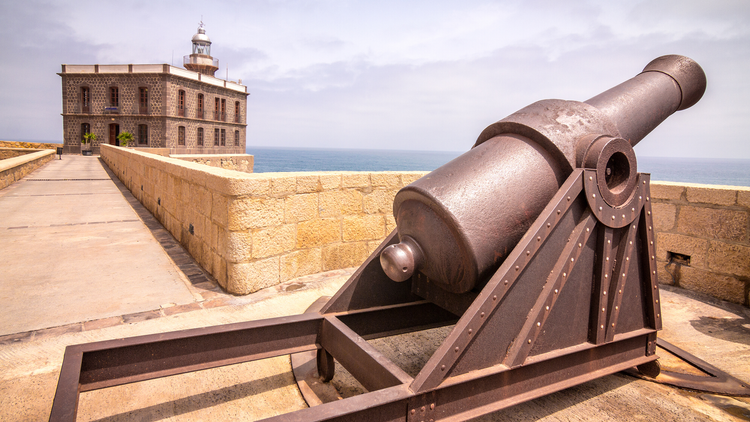
Historic cannon overlooking the Mediterranean from the fortified walls of Melilla, Spain.
Fortresses and Melilla’s Military Past
Melilla’s military past is preserved in forts, barracks, and memorials across the city. At La Purísima Cemetery, the Panteón de Héroes commemorates soldiers who died during Spain’s military campaigns around Melilla and northern Morocco. The Millán Astray barracks have been home to the Spanish Legion for more than a century.
At the Fort of Rostrogordo, the story moves into a later and turbulent period of Spanish and North African history. Abd el-Krim el-Khattabi was once held here before becoming a leading figure in the resistance against Spanish rule in northern Morocco. The Military Museum in Melilla showcases remnants of the city's historical battles, defenses, and military figures.
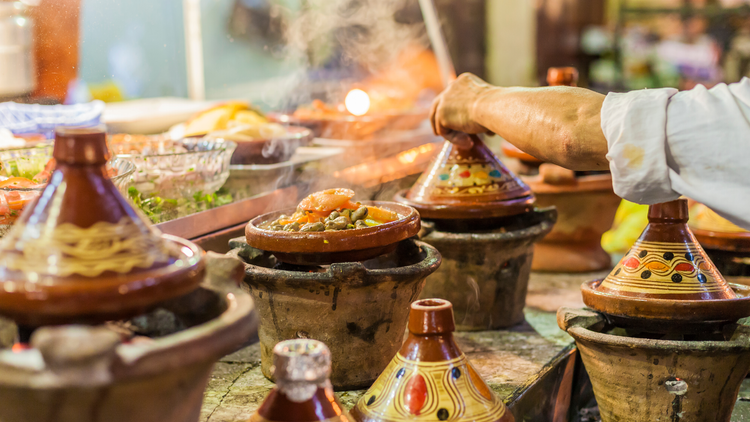
Traditional tagine dishes being prepared in colorful ceramic pots.
Melilla Food and Tapas
Tapas are part of the city’s social food culture, and the local custom of tapeo means moving from one bar or restaurant to another, enjoying a small plate at each stop. In Melilla’s old town, Spanish and Moroccan culinary traditions merge in the flavors you find along the way.
Spiced dishes like couscous and fresh fish from the Alboran Sea are common in local cuisine, and mint tea is traditionally served with local pastries made with nuts and honey. Around Plaza de España, bars serve seafood pinchos and other small bites, another variation on the Spanish tapas tradition.