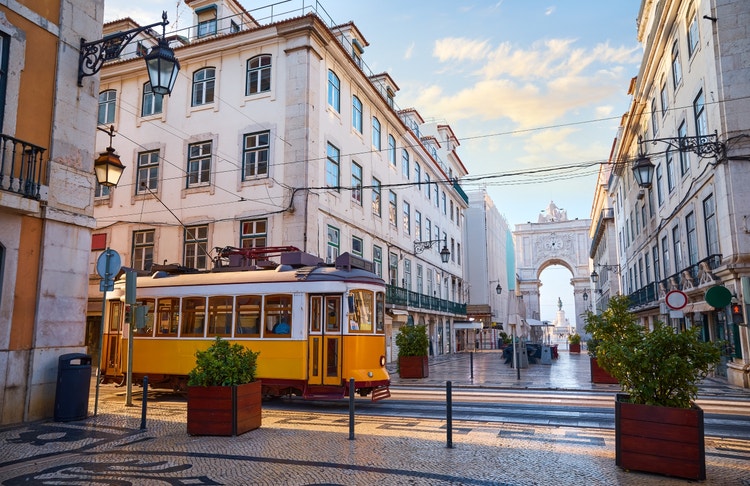
Yellow tram on a street in central Lisbon.
Lisbon and the Treasures of Portugal
Lisbon sits where the Tagus meets the Atlantic, a city of steep streets, rattling trams, and red-roofed neighborhoods spreading back from the river. Fado is part of its soundtrack, while the waterfront at Belém tells the story of the centuries when Portuguese ships sailed far beyond Europe. Belém Tower still guards the river’s edge, and nearby Jerónimos Monastery carries the wealth and ambition of the Age of Discovery in its richly carved stonework.
There is plenty more to Portugal beyond the capital. Sintra is known for its wooded hills and palaces, while Cascais brings you back to the Atlantic with a more relaxed coastal feel. South of the Tagus, Arrábida is a landscape of green hills and sea views. Farther north, Óbidos still sits within its medieval walls, its narrow streets preserving the character of a much older Portugal.
Celestyal Cruises to Lisbon
Lisbon cruise port highlights
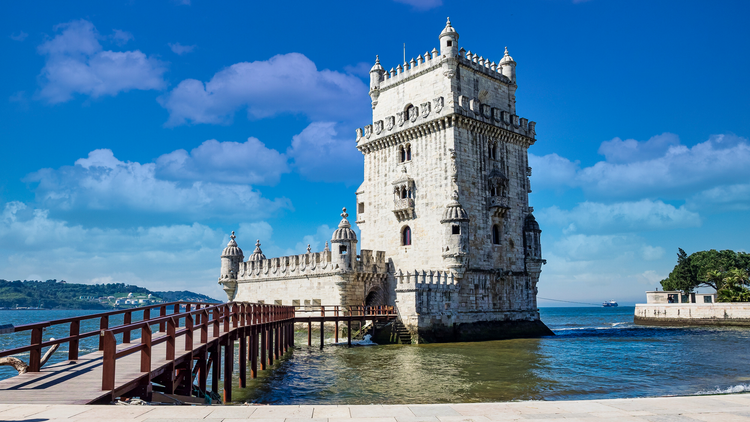
Belém Tower on the Tagus River in Lisbon, Portugal.
Belém and the Age of Discovery
Along Lisbon’s western waterfront, where the Tagus opens toward the Atlantic, Portuguese navigators once set out in search of new trade routes, helping establish a maritime empire that eventually stretched across several continents. Today, Belém is home to two landmarks that tell much of that story and together form a UNESCO World Heritage Site: Belém Tower and Jerónimos Monastery.
See Belém Tower and discover how this 16th-century fortress once helped defend the entrance to Lisbon’s harbor. Its elaborate stonework and distinctive turrets give the defensive tower an unusually ornate appearance. Nearby, the Monument to the Discoveries honors the navigators and patrons associated with Portugal’s maritime expansion.
Jerónimos Monastery stands as one of the great monuments of that era, its richly carved stonework reflecting the prosperity brought by Portugal’s voyages. Just outside, Belém’s gardens offer a quieter pause beside the monumental fountain, with a traditional custard tart adding a very Lisbon flavor to the experience.
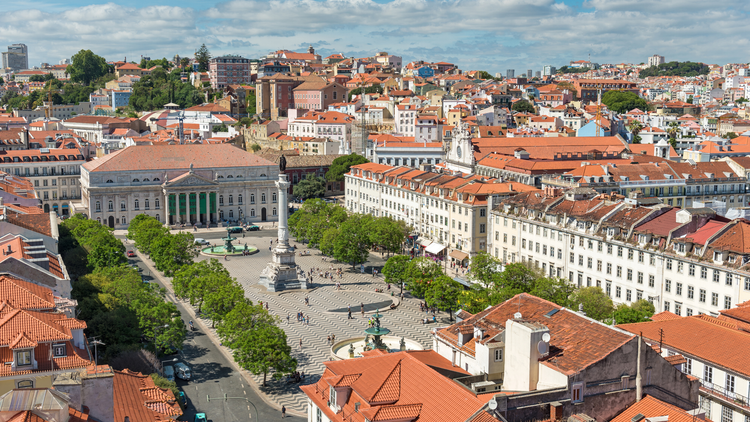
Rossio Square in Lisbon, surrounded by historic buildings.
Lisbon’s Historic Heart and Soul
In old Lisbon, steep lanes wind between tiled houses and occasionally open onto wide views across the Tagus. Historic trams rumble through Alfama and Mouraria, squeezing past balconies along narrow streets laid out long before modern transport. Casa dos Bicos catches the eye with its diamond-shaped stone façade, while Lisbon Cathedral rises above the neighborhood with an almost fortress-like appearance. Rossio Square opens into one of the capital’s liveliest historic gathering places.
After dark, fado music brings another side of Lisbon to life. In intimate restaurants, a singer’s voice and the sound of Portuguese guitar turn stories of longing, memory, and everyday life into one of the country’s most distinctive musical traditions. UNESCO recognizes Fado as Intangible Cultural Heritage of Humanity.
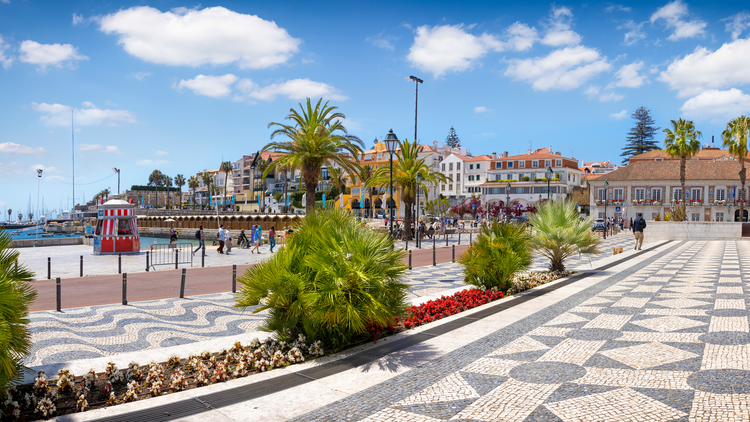
Seafront promenade in Cascais, Portugal, with palm trees and waterfront buildings.
Romantic Sintra and Seaside Cascais
Set among wooded hills, Sintra is filled with palaces, villas, and gardens shaped by the imagination of 19th-century Romanticism. Its historic center climbs through sloping streets lined with small shops and old bakeries, where local specialties include almond-filled travesseiros and sweet queijadas. There is a distinct storybook quality to the town, but much of its charm comes from these everyday details as much as from its grand architecture.
Cascais brings you back to the Atlantic. Once a fishing village, it grew into one of Portugal’s best-known seaside resorts, where cobbled streets lead toward boutiques, cafés, and the open curve of Cascais Bay. Its fishing roots are still part of the town’s identity, even as the waterfront has taken on a more polished, leisurely feel.