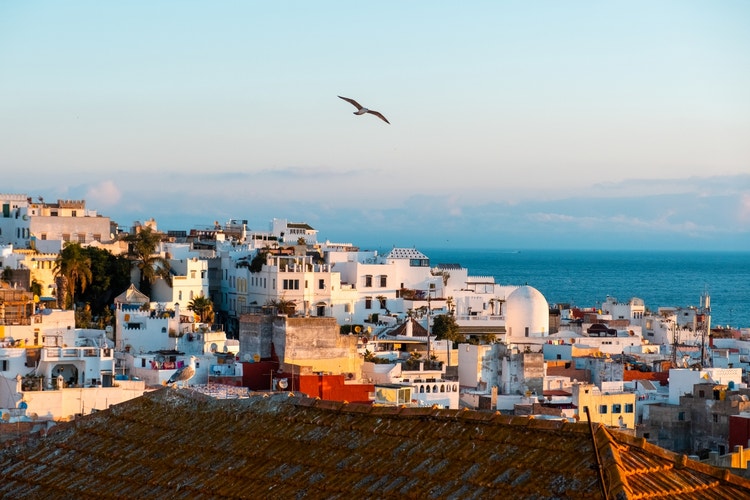
Tangier medina at dawn
Discover Tangier and Northern Morocco
Tangier occupies one of the Mediterranean’s most fascinating meeting points, poised between Europe and Africa, where the sea opens toward the Atlantic. Whitewashed houses spill across the hills above the bay, while the winding lanes of the old medina climb toward the fortified walls of the Kasbah, passing traditional markets and hidden courtyards along the way. Phoenician, Carthaginian, Roman, Arab, Portuguese, Spanish, and British influences have all played a part in Tangier’s story, giving the city the cosmopolitan character that has drawn generations of artists, writers, and travelers to its shores.most fascinating meeting points, poised between Europe and Africa, where the sea opens toward the Atlantic. Whitewashed houses spill across the hills above the bay, while the winding lanes of the old medina climb toward the fortified walls of the Kasbah, passing traditional markets and hidden courtyards along the way. Phoenician, Carthaginian, Roman, Arab, Portuguese, Spanish, and British influences have all played a part in Tangier’s story, giving the city the cosmopolitan character that has drawn generations of artists, writers, and travelers to its shores.
On a Celestyal cruise to Tangier, you can discover the city in many different ways. Wander through its historic quarters, follow the coast to Cape Spartel, or get closer to Moroccan life through fragrant local cooking and the rituals of mint tea and bread baked in a communal oven. Beyond Tangier, Tetouan preserves a rich Andalusian legacy within its white-walled medina, while Asilah slows the pace with colorful murals, local galleries, and Atlantic views.
Celestyal Cruises to Tangier
Tangier cruise port highlights

Traditional tea with mint leaves and brown sugar cubes
The Kasbah and Medina of Tangier
Step into Tangier’s old city and feel its pull. Beneath the high walls of the Kasbah, narrow lanes wind between whitewashed houses before opening into lively souks, where traders have gathered for generations. Take in the scent of spices and leather as you browse the small shops and workshops lining the lanes, their displays filled with woven textiles, hand-painted ceramics, and traditional crafts.
On one of our Tangier excursions, you can explore the Kasbah and wander through the medina below. Bargaining is part of the fun, but you can also just enjoy looking around. You might find a quiet courtyard behind one door or see the city open toward the sea around the next corner. Tangier never reveals itself all at once, and that’s part of its appeal.
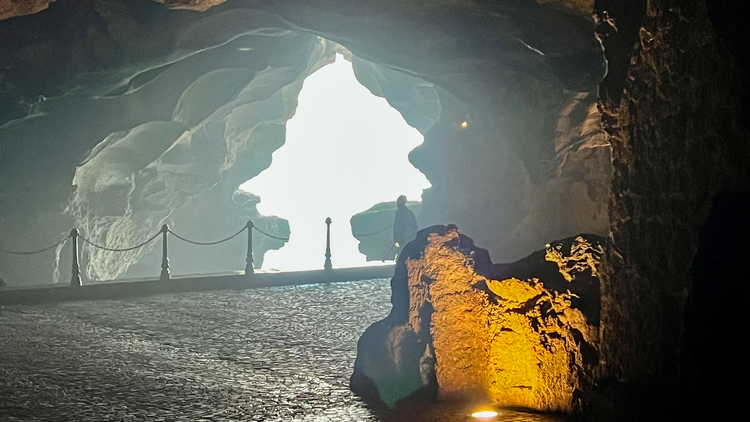
Inside the cave of hercules
Cape Spartel and the Caves of Hercules
Travel west from Tangier to Cape Spartel, a beautiful natural landmark where the Atlantic meets the Mediterranean at the entrance to the Strait of Gibraltar. Above the cape rises the oldest lighthouse in Morocco, a Moorish-style lighthouse built in 1860. Head to the top and take in panoramic views across the water and along the coast.
Not far away, the Caves of Hercules bring one of Morocco’s best-known legends into the landscape. According to tradition, the ancient hero rested here after completing one of his famous labors. Look toward the sea, and you’ll find the cave’s famous opening, whose shape is often compared to the outline of Africa. Nearby, sandy Achakkar Beach offers another look at this wild stretch of Atlantic coast.
For something more energetic, explore the countryside around Tangier by dune buggy. Rural trails pass the turbines of the Beni Mejmel Wind Farm before climbing through the Chejirat Forest to a mountain lookout over the surrounding landscape.
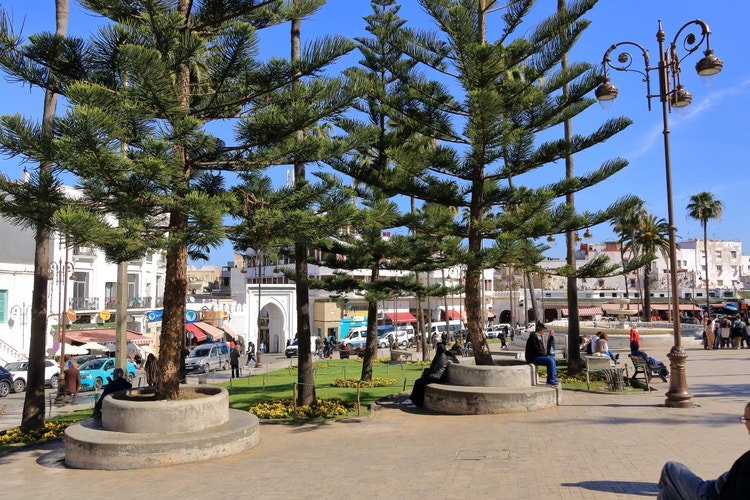
Old medina in the center of Tangier with pine needle trees
Tetouan’s Andalusian Soul
Tetouan, known as the daughter of Granada, stands out as soon as you see its white houses. Its strong Andalusian heritage can still be traced through the city today, particularly within its UNESCO-listed medina, one of Morocco’s best-preserved historic quarters, enclosed by fortified walls and seven decorated gates.
Inside, the narrow lanes feel close and lively, with traditional crafts still part of everyday life. Around Place Hassan II, the Royal Palace and Hispano-Moorish architecture speak to Tetouan’s long connection with Spain and Andalusia. The city’s cultural traditions also come through in its teahouses, where fresh Moroccan mint tea is accompanied by live performance.
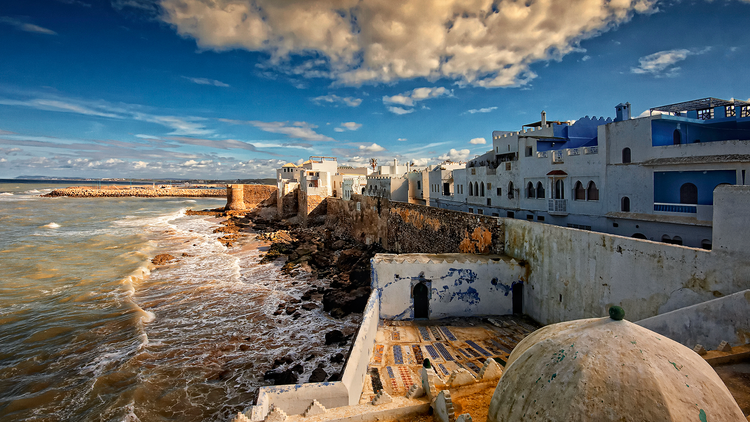
The Asilah coastline
Discover Asilah’s Coastal Charm
Close to Tangier but much more relaxed, Asilah is a small coastal town with a strong creative streak. Its compact whitewashed medina sits within historic Portuguese ramparts, with local galleries tucked among blue-trimmed houses and streets that lead toward the Atlantic.
Each year, international artists bring new murals to the medina, turning its walls into an outdoor gallery that continues to change. Some works fill entire façades with color; others appear almost unexpectedly between doorways and along narrow streets. Asilah is a place worth taking your time.
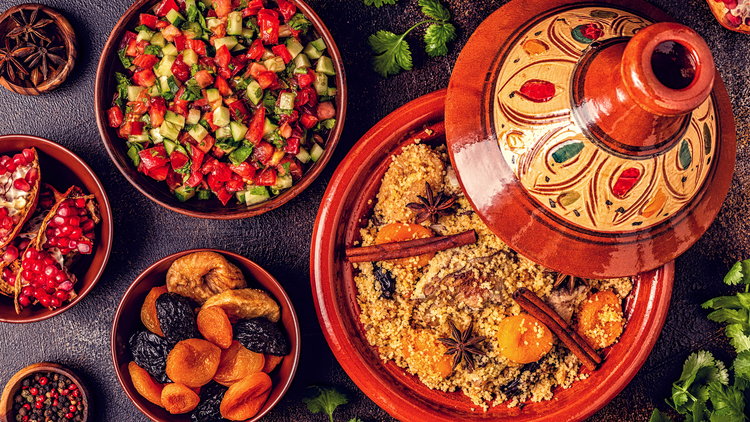
Traditional tagine with dried fruits and a cucumber salad
The Flavors of Tangier
Experience Moroccan cuisine up close, from browsing fresh ingredients in the medina market to learning how fragrant spices come together in a traditional tagine, a slow-cooked Moroccan stew. Along the way, pick up a few everyday Arabic phrases and discover how this much-loved dish is prepared.
Mint tea and freshly baked bread are part of everyday life in Tangier. Tea is prepared with care and traditionally poured from above the glass, while neighborhood wood-fired ovens, known as ferrans, have long been shared by local families for baking bread and pastries. Served warm with local spreads or honey, these simple traditions offer a glimpse into the rhythms of daily life in the city.