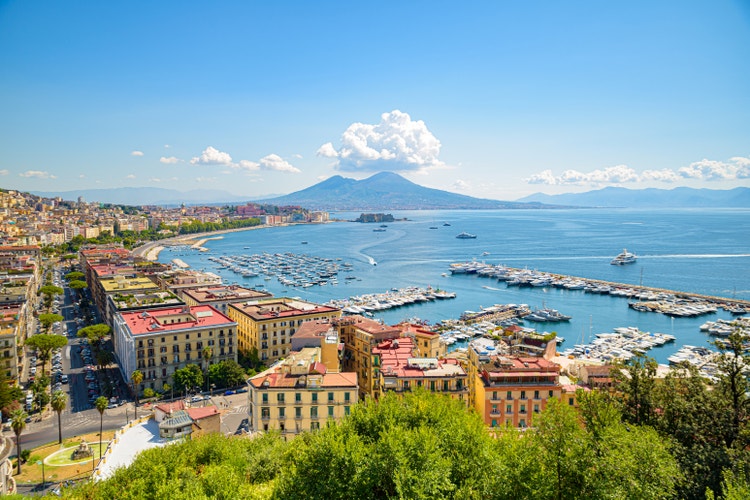
Panoramic view of Naples marina and waterfront, with Mount Vesuvius rising in the background.
Vesuvius, Pompeii, and the Amalfi Coast
Naples spreads around its great bay beneath Mount Vesuvius, a southern Italian city famous for its crowded historic streets, grand churches, and a food culture that gave the world pizza. The sea is never far away either. Ferries and hydrofoils cross the Bay of Naples toward Capri, while Vesuvius remains a constant presence above the city and the towns gathered around its base.
From here, some of southern Italy’s most memorable places come within reach. Pompeii lies at the foot of the volcano, buried beneath six to seven meters of ash and pumice after the eruption of AD 79 and preserved as an extraordinary record of Roman life. Across the bay, Capri has long attracted famous visitors with its flower-filled town, designer boutiques, and Mediterranean views. Amalfi brings you to one of Italy’s best-known stretches of coastline, while the fertile slopes of Vesuvius support vineyards where local wines are still produced. views. Amalfi brings you to one of Italy’s best-known stretches of coastline, while the fertile slopes of Vesuvius support vineyards where local wines are still produced.
Celestyal Cruises to Naples
Naples cruise port highlights
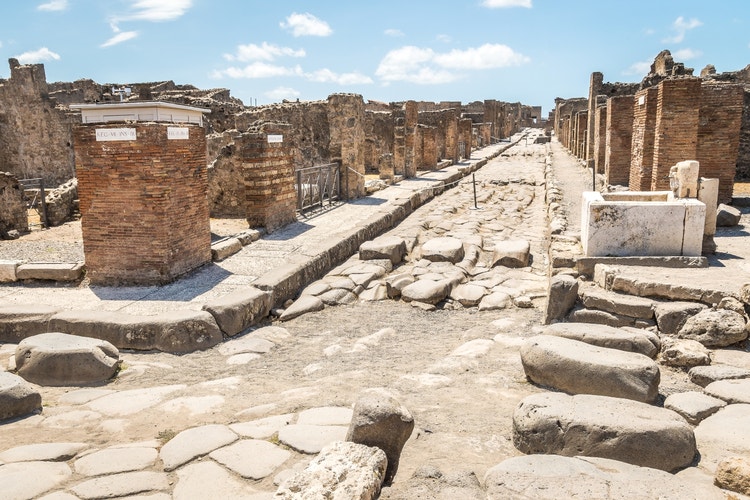
Ancient stone-paved street and ruins of Pompeii near Naples, Italy.
Life Beneath Vesuvius
Few archaeological sites bring the Roman world as close as Pompeii. Its ancient streets still follow the layout of a once-busy city, leading between the Forum, temples, and the remains of grand houses. These surviving spaces give a vivid sense of what daily life was like here almost 2,000 years ago.
The Forum was once the busy center of Pompeii, surrounded by grand mansions and temples that hint at how lively and prosperous the city was before the eruption changed everything in an instant. What you see today is more than just crumbling stone; it’s the streets, homes, and public spaces of a Roman city, frozen in time beneath the shadow of Vesuvius.
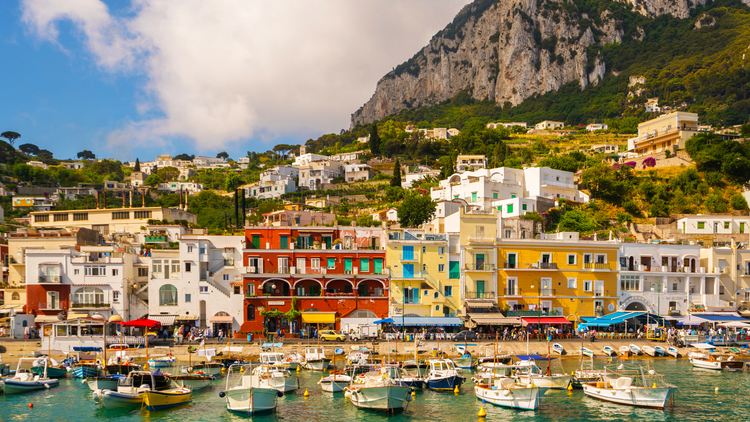
Colorful waterfront buildings and boats at Marina Grande on the island of Capri, Italy.
An Island in the Spotlight
Capri has long attracted film stars, musicians, and other famous visitors. Marina Grande sits at the water’s edge, while the funicular climbs steeply toward Capri town, where avenues burst with flowers and designer names sit alongside cafés and places to pause over a glass of wine. Yet the island’s appeal goes beyond its famous visitors. Mediterranean views, colorful streets, and the slower rhythm of island life give Capri plenty of character of its own.
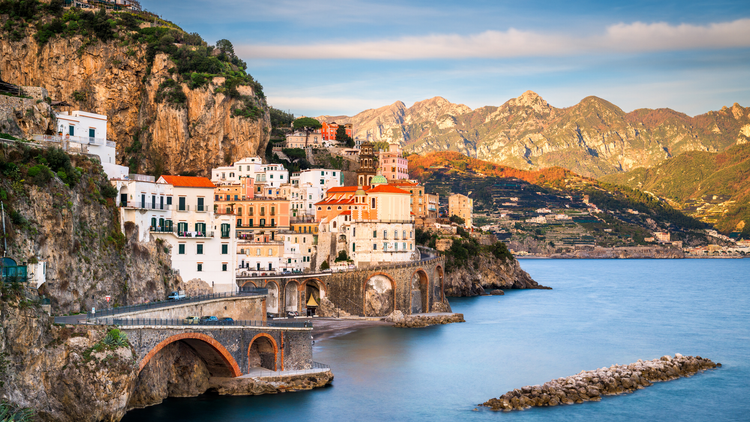
Amalfi town on Italy’s Mediterranean coast, with colorful buildings set on cliffs above the sea.
Amalfi and the Mediterranean Coast
Amalfi sits on one of Italy’s most famous stretches of coastline, where steep land drops toward the Mediterranean and the town faces directly onto the sea. Approaching from the water gives the coastline its full scale, with the mountains behind and the waterfront below.
Its compact center offers time for an unhurried look around, with shops, places to eat, and plenty of opportunities to simply take in the coastal setting. Sometimes the appeal is exactly that simple: sea air, Italian streets, and nowhere you need to rush to next.
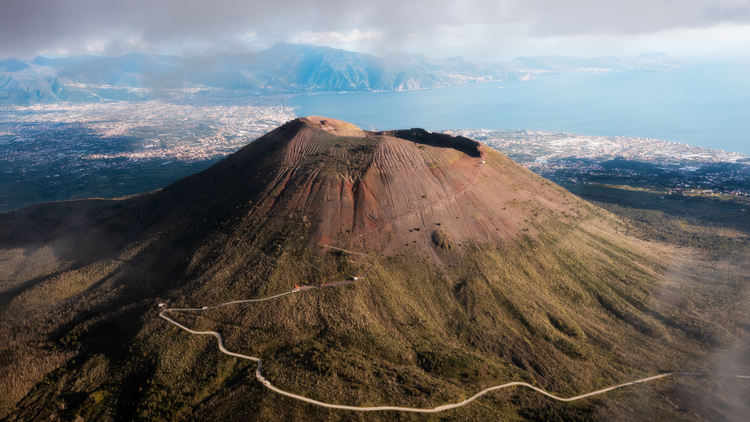
Mount Vesuvius near Naples, Italy, with its crater and winding paths.
Mount Vesuvius and the Wines of its Slopes
Mount Vesuvius dominates the landscape around Naples. The only active volcano on mainland Europe, it's famous for the eruption that destroyed Pompeii, but its lower slopes tell a less destructive story. The volcanic ground here is remarkably fertile, and vineyards grow across the terrain beneath the crater.
At a winery on the slopes, local wines are paired with homemade bruschetta, while the area’s geography, history, and culture help explain the food and wine produced around the volcano.