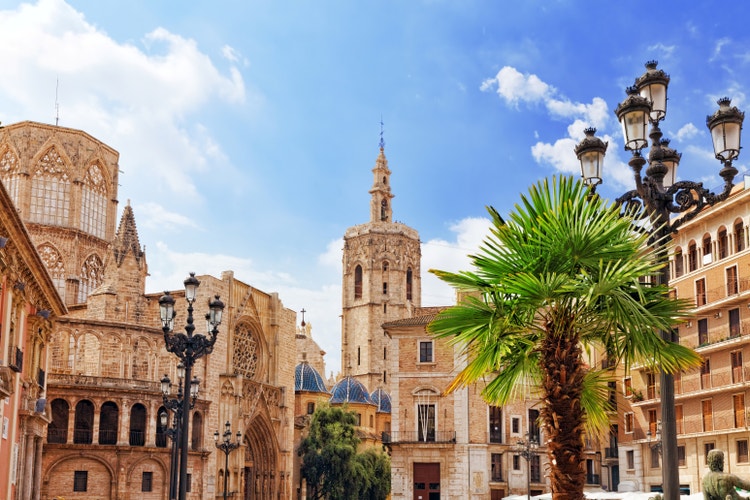
Valencia Cathedral and El Miguelete bell tower in the historic center of Valencia, Spain.
Discover Valencia: Old Town, Silk Heritage, and Futuristic Architecture
Valencia, Spain’s third-largest city, brings together centuries of history, vibrant urban life, and a food culture deeply rooted in the region. With around 300 days of sunshine a year, golden beaches, and an eye-catching mix of historic streets and futuristic architecture, this Mediterranean city has plenty to surprise you. Roman foundations, Moorish influences, and the legacy of the silk trade are still woven into the historic center, while Valencia’s iconic City of Arts and Sciences shows how boldly the city has looked to the future. Move between the two, and you’ll come across lively markets, sunny plazas, and neighborhoods where long-held traditions are still part of everyday life.
It’s this meeting of old and new that makes Valencia so rewarding to explore. One moment you may be following the story of Valencian silk through Gothic halls; the next, you’re standing beneath the soaring architecture of a modern opera house. There is plenty to taste along the way, too. Pause over a chilled glass of horchata, try freshly prepared Valencian paella, or sip orange juice in the countryside where the fruit is grown. Venture beyond the city and orange groves gradually give way to vineyards and the rock-cut cellars beneath historic Requena.
Celestyal Cruises to Valencia
Valencia cruise port highlights
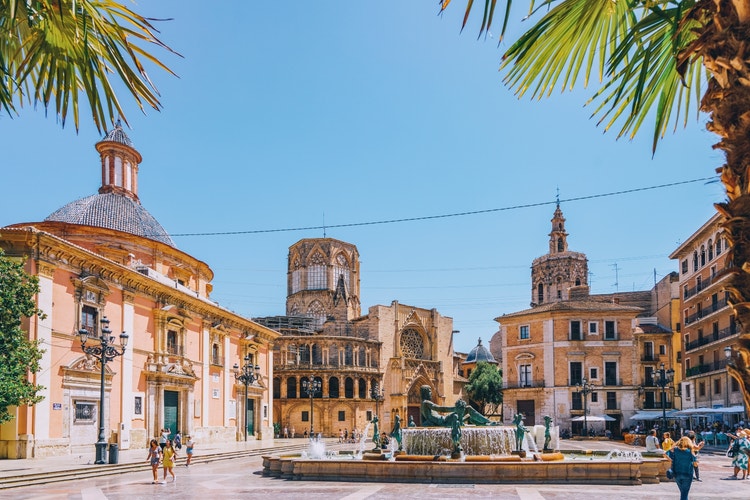
Plaza de la Virgen in Valencia, with historic buildings, a fountain and palm trees under a clear blue sky.
The Futuristic Heart of Valencia
Valencia’s City of Arts and Sciences brings a striking change of pace from the medieval streets of the historic center. Futuristic architecture defines this part of the city, creating one of Valencia’s most recognizable modern landmarks and a very different expression of its character.
At the heart of the complex stands the Palau de les Arts Reina Sofía, Valencia’s opera house and performing arts center, and one of the defining buildings of the City of Arts and Sciences.
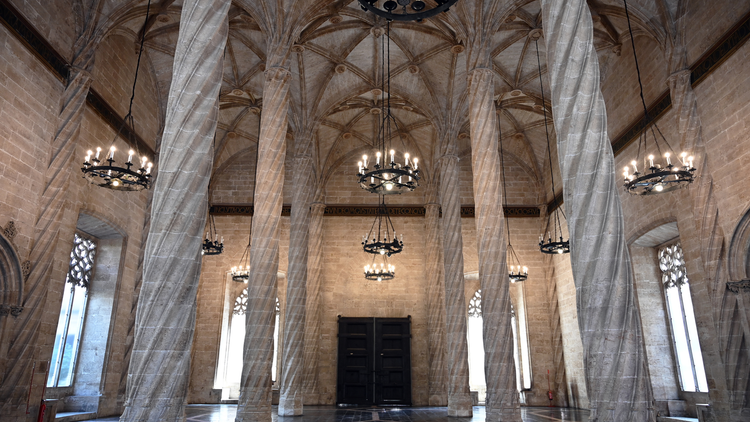
Gothic interior of La Lonja de la Seda in Valencia, with tall twisted stone columns and vaulted ceilings.
The City Woven in Silk
Before Valencia’s modern skyline took shape, silk helped make the city prosperous. Valencia became one of Europe’s leading silk-weaving centers, and that heritage survives in the Barri de Velluters and the College of High Silk Art Museum, where you can uncover the intricate handmade techniques behind traditional Valencian fabrics.
The story reaches its grandest expression at La Lonja de la Seda, the UNESCO-listed Silk Exchange. This Gothic trading hall still speaks of a time when fine Valencian fabrics traveled across Europe. Nearby, the Central Market presents a livelier side of the city’s heritage, its metal, glass, and colorful ceramic details surrounding stalls of fresh produce and regional ingredients.
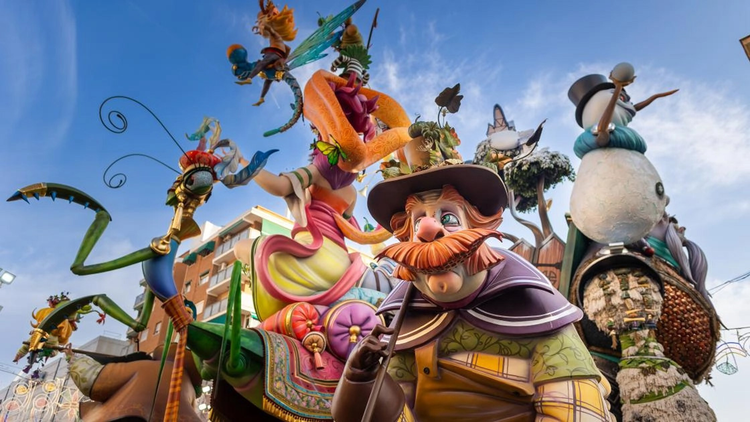
Colorful Fallas festival figures, known as ninots, displayed in Valencia, Spain.
The Craft Behind the Fallas Festival
Fallas may take over Valencia’s streets each March, but the work begins many months earlier in the workshops of Ciutat Fallera. Here, local artists construct the towering papier-mâché figures known as ninots, building and decorating them piece by piece before they become part of the city’s famous festival.
The active workshops of Ciutat Fallera offer a closer look at the skill behind these enormous creations, while the Museo del Artista Fallero traces the craftsmanship and imagination that have shaped Fallas over the years.
Why spend months creating something destined to disappear in a single night? In Valencia, that’s part of the tradition. Fallas celebrates the work of generations of local artists and the communities that bring the festival to life each year, earning recognition from UNESCO for its cultural importance.
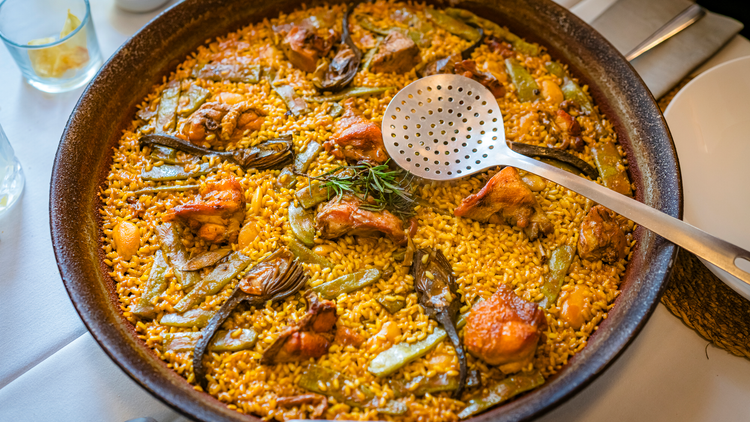
Traditional Valencian paella with rice, vegetables and meat served in a large paella pan.
Explore Valencia’s Food and Wine
Paella Valenciana, the traditional rice dish of the region, is part of Valencia’s identity. The neighborhood market in Algirós offers a closer look at the fresh ingredients behind local cooking, and a hands-on paella masterclass shows how those ingredients come together in Valencia’s most famous dish. Made in the traditional Valencian style and enjoyed with local wine, it connects the city’s best-known recipe directly to the place where it was born.
In the city center, horchata offers another taste of Valencia, a refreshing tiger-nut drink traditionally served with a soft, sweet fartón for dipping. Beyond the city, the food story continues through the citrus groves around Carcaixent, where seasonal juice, homemade preserves and orange-blossom honey reflect the region’s long connection with oranges and lemons. Farther inland, Requena is known for wine and cava, with protected vineyards surrounding a historic old quarter and rock-cut cellars once used to store wine and grain and at times provide shelter.