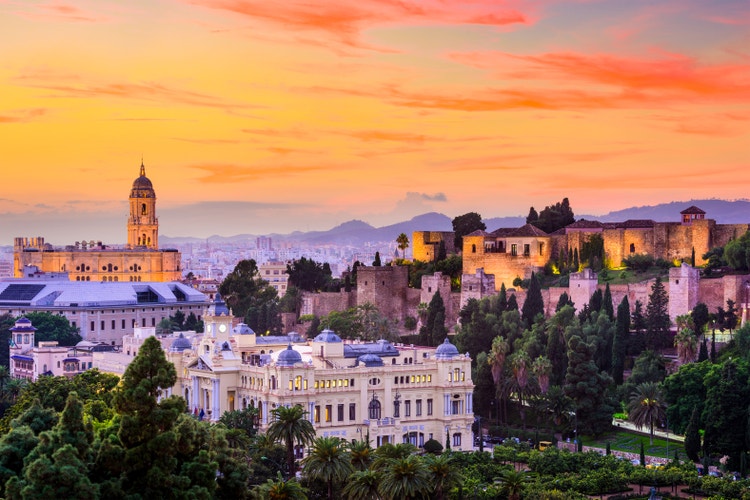
Málaga Cathedral and Alcazaba fortress overlooking the city at sunset.
Discover Málaga and the Best of Andalusia
Málaga has spent nearly 3,000 years looking out across the Mediterranean, shaped in turn by Phoenician traders, Roman settlers, and Moorish rulers. Between the sea and the surrounding mountains, sunlit plazas and narrow streets lead past buildings that still carry traces of those different periods. The Renaissance Cathedral rises at its heart, while museums and galleries reflect the creative energy of Pablo Picasso’s birthplace. With such a long history and a lively cultural scene, Málaga is a city where the past still feels present without ever holding the place back. and Moorish rulers. Between the sea and the surrounding mountains, sunlit plazas and narrow streets lead past buildings that still carry traces of those different periods. The Renaissance Cathedral rises at its heart, while museums and galleries reflect the creative energy of Pablo Picasso’s birthplace. With such a long history and a lively cultural scene, Málaga is a city where the past still feels present without ever holding the place back.
To the east, Pedregalejo and El Palo keep Málaga’s fishing traditions close to everyday life, while inland, olive-growing countryside surrounds whitewashed Mijas and historic Ronda. Granada’s Alhambra and Córdoba’s Mosque-Cathedral add still deeper layers to the story of Andalusia, each shaped by the cultures that left their mark on southern Spain.
Cruises to Málaga
Málaga cruise port highlights
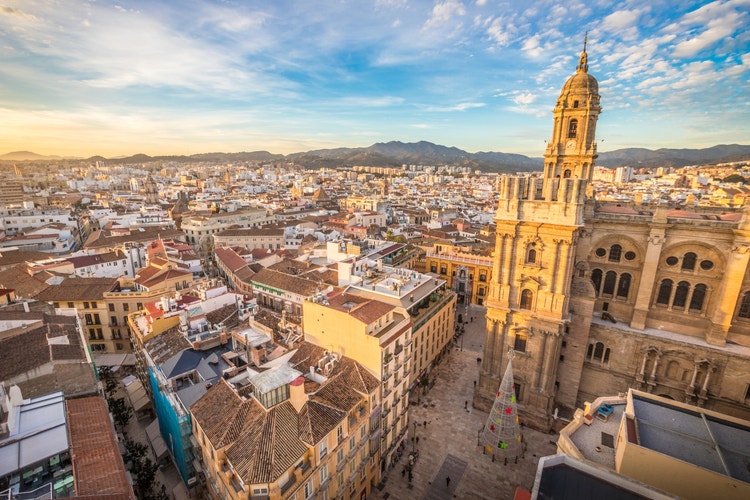
Aerial view of Málaga Cathedral and the surrounding Old Town, with mountains in the distance.
Málaga Old Town and Flamenco
Uncover Málaga’s story as you wander the Old Town. Narrow paved streets and lively plazas reveal a past dating back to the city’s Phoenician beginnings, followed by Roman rule and centuries of Moorish influence. The Renaissance Cathedral dominates the center, its famously unfinished second tower giving Málaga’s skyline a character of its own. Above the city, the Alcazaba and Gibralfaro Castle recall Málaga’s Moorish past. From Gibralfaro, panoramic views take in the city, the bay, and the seafront below.
After exploring Málaga’s historic monuments, settle in to witness one of Andalusia’s great living traditions. In an intimate performance, guitarists and dancers bring flamenco to life through rhythmic guitar and passionate footwork. The mood moves from quiet intensity to sudden bursts of energy, capturing the emotion and character that have made flamenco such an enduring part of southern Spanish culture. Recognized by UNESCO, it remains one of Andalusia’s most powerful forms of artistic expression.
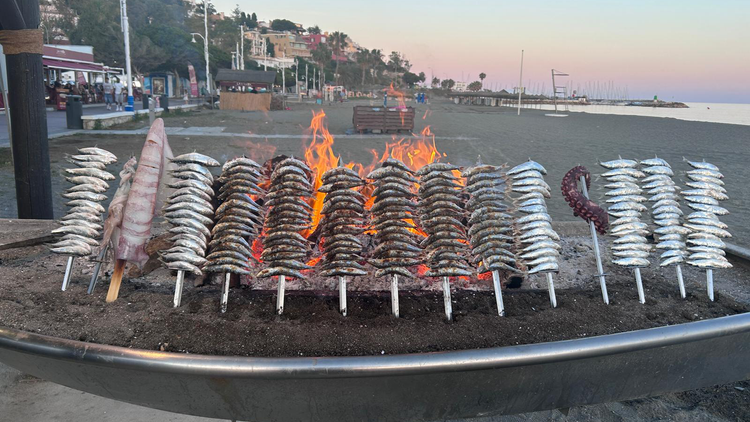
Sardines grilled on skewers over an open fire on the beach in Pedregalejo, Málaga.
Pedregalejo and Málaga’s Espeto Tradition
East of Málaga’s center, the coastal neighborhoods of Pedregalejo and El Palo still carry the character of the city’s old fishing communities. Along the waterfront, chiringuitos, traditional beachside restaurants, keep one of Málaga’s best-loved food traditions alive. Fresh sardines are threaded onto cane skewers and slowly grilled over a wood fire to make an espeto, a classic local specialty. The tradition is kept alive by skilled espeteros, who prepare the sardines by hand over an open fire. Paired with fresh tomato salad and enjoyed beside the Mediterranean, the simplicity of the ingredients lets the skill and setting do the talking.
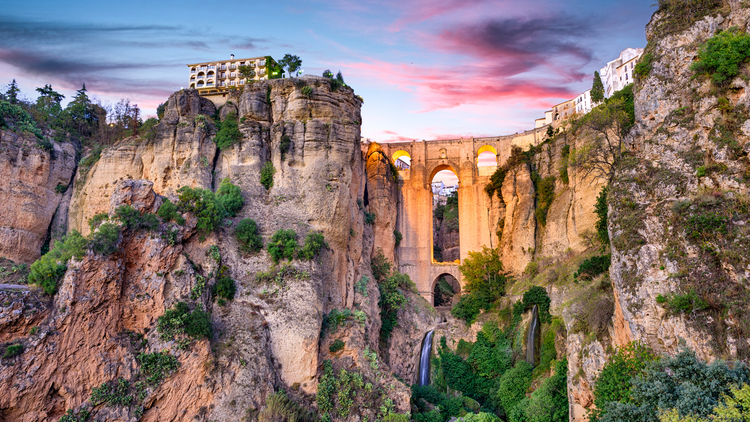
Puente Nuevo bridge spanning the El Tajo gorge in Ronda, Spain, at sunset.
Ronda and Andalusian Olive Oil
Ronda occupies one of Andalusia’s most dramatic settings, high above the deep El Tajo gorge and surrounded by mountains. Whitewashed lanes lead toward the Puente Nuevo, the monumental 18th-century bridge spanning the gorge at a height of almost 100 meters. Nearby, the Plaza de Toros, a historic bullfighting arena dating from 1785, is one of the oldest in Spain.
Beyond the town, discover the olive groves of rural Andalusia. At LA Organic, the region’s olive-growing heritage takes center stage, with a museum dedicated to extra virgin olive oil and tastings among the surrounding groves. Premium oils are paired with Iberian ham and loin, Payoyo cheese, Spanish omelet, and seasonal fruit, bringing some of the countryside’s best-known flavors together.
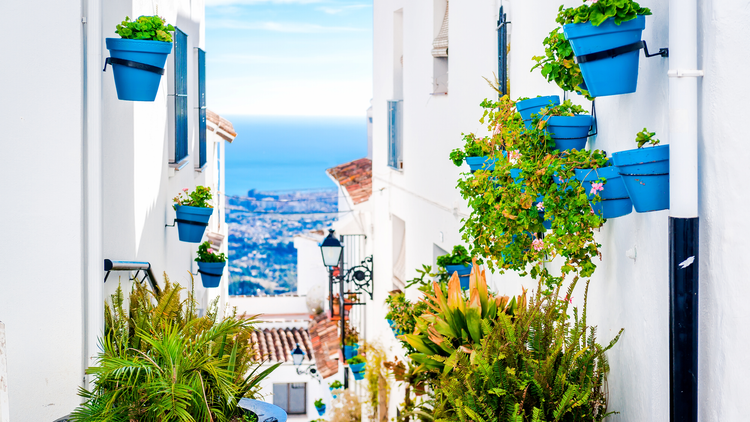
Whitewashed street in Mijas Pueblo, Spain, with blue flowerpots and views toward the Mediterranean Sea.
Mijas Pueblo and Rural Málaga
Climb into the hills above the Costa del Sol, and you’ll find Mijas Pueblo, a whitewashed village spread across a mountain slope with the Mediterranean far below. Its old quarter is made for wandering, with small artisan shops selling local pottery and paintings. One of its most unusual landmarks is the Chapel of Our Lady of the Rock, carved directly into stone beside a panoramic viewpoint.
In Colmenar and Alfarnate, rural traditions come through in everything from churros with rich chocolate and traditional olive milling to generous home-cooked meals shared with local families. Together, they offer a more personal glimpse of the food, customs, and warm hospitality of the Málaga countryside.