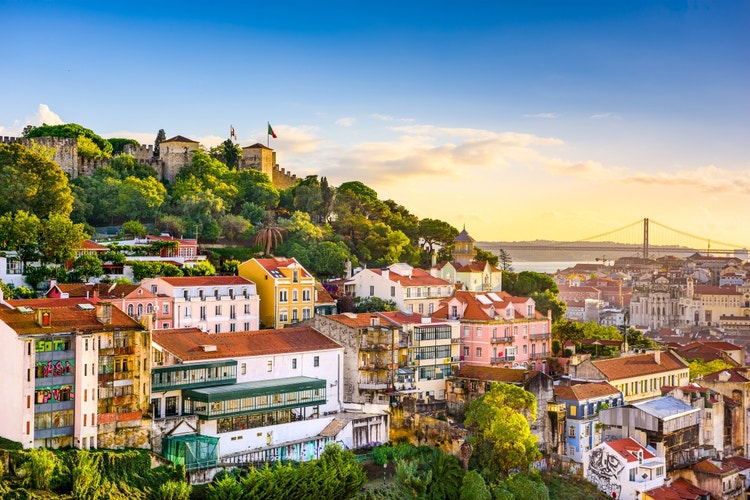
Lisbon cityscape with São Jorge Castle, colorful hillside buildings and the 25 de Abril Bridge at sunset.
Riverside Cities, Romantic Palaces and Timeless Traditions
Portugal unfolds from the banks of the Tagus to historic towns, wooded hills, and a coastline shaped by centuries of seafaring. In Lisbon, steep streets and red-tiled neighborhoods rise above the river as yellow trams pass through older quarters, while the monuments of Belem recall the era of Portuguese maritime expansion. Beyond the capital, places such as Sintra, Cascais, Arrabida, and Obidos offer contrasting glimpses of the country's landscapes, history, and local character.
Portugal's distinct identity is also found in the rhythms of daily life and enduring traditions. Fado gives voice to themes of longing and memory in Lisbon's intimate music venues, pastel de nata is enjoyed fresh from local bakeries, and regional flavors range from Moscatel de Setubal to Obidos's cherry liqueur, ginjinha. These smaller moments bring warmth and texture to a country shaped by a long and layered past.
Celestyal cruises to Portugal
Portugal Cruise Highlights
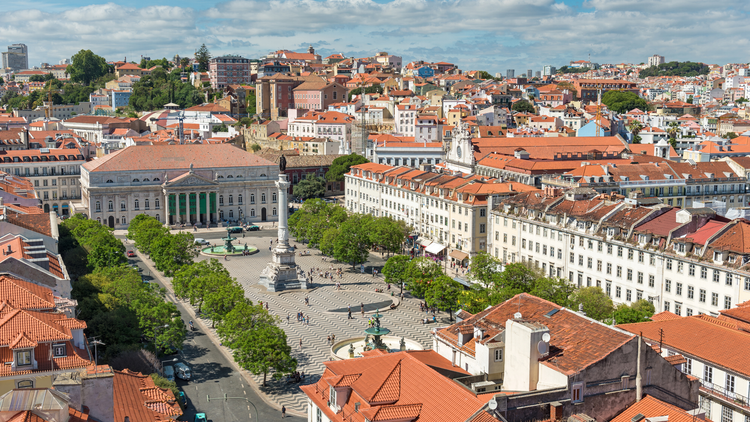
Aerial view of Rossio Square and Lisbon’s historic center, with red-tiled rooftops and surrounding historic buildings.
Lisbon and the Age of Discovery
Lisbon is a bright, hilly city of pastel facades, cobbled streets, and sweeping views across the Tagus. In its oldest neighborhoods, Alfama and Mouraria, narrow lanes wind between tiled houses and historic buildings before descending toward the waterfront. To the west, Belem is home to the 16th-century Belem Tower, built to help defend the entrance to Lisbon's harbor. Nearby, Jeronimos Monastery reflects the wealth of Portugal's maritime era in its richly carved stonework.
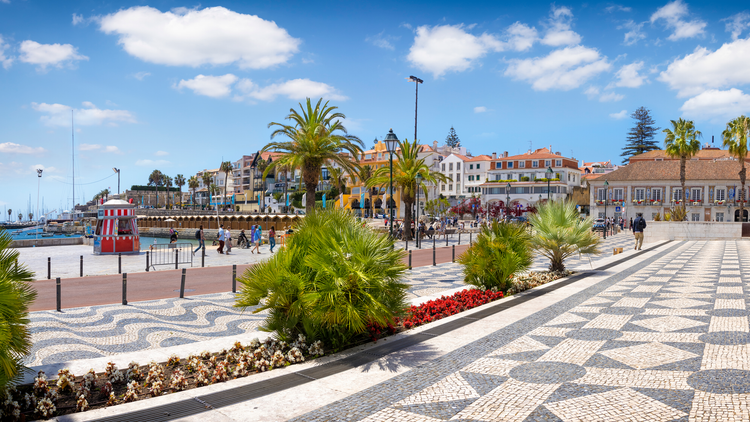
Seafront promenade in Cascais, Portugal, with palm trees, mosaic paving and the harbor in the background.
Romantic Sintra and Seaside Cascais
Set among wooded hills, Sintra is closely associated with the Romantic movement of the 19th century. Palaces, villas, and gardens rise above sloping streets lined with small shops and traditional bakeries, where local specialties include almond-filled travesseiros and queijadas. Cascais, once a fishing village and later a favored seaside retreat, is now one of Portugal's best-known coastal towns, with cafes and boutiques around Cascais Bay while fishing boats in the harbor still reflect the town's maritime heritage.
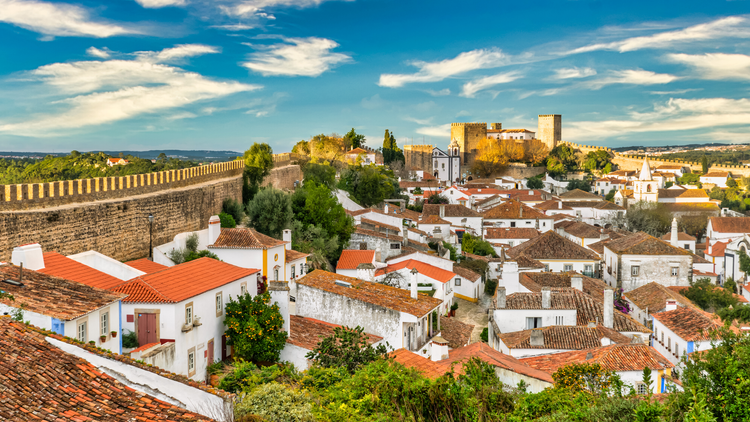
Whitewashed houses and medieval walls of Óbidos, Portugal, with the hilltop castle in the background.
Portuguese Towns Beyond Lisbon
Portugal offers much more to explore beyond the capital. South of the Tagus, Arrabida brings together protected hills, coastal views, the market culture of Setubal, and the winemaking traditions of nearby Azeitao. Farther north, Obidos stands within medieval walls, where whitewashed houses, flower-filled balconies, and narrow lanes preserve the character of a historic fortified town. Portugal's royal, architectural, and religious heritage also comes into focus in Mafra, Batalha, and Fatima. In Mafra, the vast palace-convent is one of the country's most striking monuments; in Batalha, intricate Gothic stonework reflects the ambition of a great royal foundation; and in Fatima, one of the world's best-known Catholic pilgrimage sites, faith continues to shape the life of the town.